

10 Quality Checks MSMEs Should Make Before Placing Festive Bulk Orders
- Festive bulk orders can help MSMEs meet higher demand, but larger purchases also increase the risk of blocked working capital if inventory is defective, non-compliant, or unsuitable for sale.
- The article covers 10 checks MSMEs should make before confirming a bulk order, including product specifications, supplier documentation, samples, batch testing, certifications, packaging, warranty terms, complaint responsibility, and written rejection and return conditions.
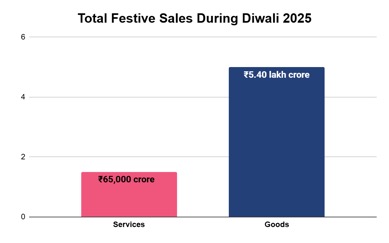
The festive season is one of the busiest periods of the year for MSMEs. This can be seen in an estimated ₹6.05 lakh crore in sales during Diwali 2025, which was 25% higher than the previous year. Of this, goods accounted for ₹5.40 lakh crore and services ₹65,000 crore1. While higher demand can create opportunities for small enterprises, it can also increase risk. A large order can lock up considerable working capital. If the inventory arrives damaged, does not meet specifications, carries incorrect labels, or cannot be sold because of compliance issues, the loss can extend beyond the cost of the goods. Thus, festive procurement needs to go beyond negotiating prices and delivery dates.
This blog article lists 10 quality checks MSMEs must consider before confirming a large order.
1. Define Clear Product Specifications, Not Just the Purchase Quantity
Vague terms such as “premium quality” can create disagreement. Written specifications provide the buyer and supplier with a common reference point. If there is a dispute after delivery, the purchase order can be used to verify whether the inventory matches what was originally agreed upon.
Before confirming the order, MSMEs can define specifications such as product size, material, grade, weight, colour, finish, composition; acceptable quality standards variations; packaging, labelling requirements; and product-specific certifications.
2. Check Supplier Documentation Before Confirming the Order
A good-looking sample does not provide all the information a business may need before placing a large order. Documentation becomes particularly important when products are regulated, manufactured in different batches, or supplied through distributors.
Depending on the product, businesses can ask for documents such as supplier invoices and GST details, specification sheets, test reports, certificates of conformity, manufacturing details, batch or lot information, and applicable licenses or registrations. The documents should also be checked against the actual goods being purchased. This basic verification can help businesses avoid discovering gaps only after a large quantity has already been received and paid for.
3. Approve a Representative Sample Before Full Production
Samples are useful, but MSMEs need to know what the sample represents. A specially prepared display sample may look different from the units eventually produced in bulk. Wherever possible, businesses can request a production sample that reflects the material, process, finish, and packaging used for the final order. Once approved, the sample can be retained as a reference. The related specifications should also be recorded in writing, along with any acceptable variation.
This can be particularly useful for festive gift boxes, garments, printed products, customised packaging, promotional material, décor items, and manufactured components. Such goods may be produced specifically for the season or for a particular buyer. If the final batch does not meet requirements, finding another buyer for the rejected inventory may be difficult.
4. Use Batch Sampling Instead of Checking Only a Few Convenient Pieces
Checking every unit in a shipment containing thousands of pieces may not always be practical. But inspecting only the first few items can be equally risky. A better approach is to spread checks across the shipment. Samples can be taken from different cartons, pallets, lots, or production batches. Where possible, products can also be selected randomly rather than allowing the supplier to provide only the units that will be inspected. The level of checking can depend on factors such as the size of the order, value of each product, previous experience with the supplier, and impact of a defective unit reaching a customer.
5. Verify Product-Specific Certifications and Compliance
quality is not simply a matter of what the buyer and seller agree upon. Certain products are subject to government-mandated standards, certifications, labelling requirements, or safety rules.
The Bureau of Indian Standards (BIS) states that while its certification system is generally voluntary, the Central Government has made compliance with Indian Standards compulsory for certain products through Quality Control Orders. BIS maintains updated lists of products covered by various compulsory certification schemes.
MSMEs sourcing such products can check mandatory and valid certification to check if the certification covers the exact product or model being ordered, or if the required information appears correctly on the product and packaging.
Different regulators can apply to different categories. For example, food businesses need to consider FSSAI regulations, which cover areas such as food packaging, labelling, and display requirements for pre-packaged food. The safest approach is to identify the regulator relevant to the specific product rather than assume the supplier has already completed all required checks.
6. Inspect Packaging as Carefully as the Product
Festive inventory can pass through several stages: supplier to transporter, transporter to warehouse, warehouse to store, and finally from the store to the customers. Packaging therefore needs to protect the product through the entire journey. A product may leave the supplier’s premises in perfect condition and still become unsellable by the time it reaches the customer.
MSMEs must check carton strength, internal separators, cushioning, sealing, moisture protection, labels, barcodes, quantity per carton, and fragile or handling instructions. For products sold in decorative festive packs, the condition of the packaging is very important. A dented gift box or torn retail pack may be difficult to sell even when the product inside is undamaged.
7. Clarify Warranty and Replacement Terms Before Payment
For products covered by a warranty or replacement arrangement, MSMEs should understand exactly what the supplier will do if a problem is discovered after delivery.
Important questions include which defects qualify for replacement, how long the warranty or replacement period lasts, whether defective goods will be repaired, replaced, refunded, or adjusted through a credit note, who will bear return transportation costs, what evidence needs to be provided, and how quickly replacement stock will be supplied. The last question becomes particularly important during the festive season. A supplier may agree to replace defective festive stock, but inventory delivered after the peak selling period may no longer have the same value to the business. A replacement commitment is therefore more useful when the expected turnaround time is also clearly agreed upon.
8. Decide Who Will Handle Customer Complaints
The responsibility for product quality may become less clear once the item reaches the final customer. This is especially relevant when an MSME acts as a retailer or reseller of products manufactured by another business. If a customer reports a defective electrical appliance, a damaged packaged product, a missing component, or a warranty issue, the retailer needs to know what happens next.
Before ordering, businesses can clarify whether complaints will be handled directly by the manufacturer, whether the supplier offers after-sales support, whether returned goods can be sent back to the supplier, and whether replacement inventory or a credit will be provided. The arrangement should also make clear which types of loss the retailer is expected to absorb.
9. Rejection and Return Conditions as a part of contracts/agreements/MoUs
Some quality problems become visible immediately. Others may emerge only when cartons are opened, products are tested, or a larger part of the batch is inspected.
Without written conditions, the buyer and supplier may disagree over whether goods can still be rejected or how much of the batch needs to be defective before action is taken.
An agreement can therefore clarify how long the buyer has to inspect the goods, what qualifies as a defect, acceptable defect limits where applicable, how defects need to be reported, whether individual units or an entire batch can be rejected, return and replacement timelines, refund or credit-note conditions, who will bear transportation costs, and how partially defective batches will be handled.
These terms are easier to agree upon while the order is still being negotiated. Once the goods have been delivered and payment has been made, resolving the same questions can become much more difficult.
10. Run One Final Check Before Releasing the Bulk Order
Festive schedules can become hectic. When suppliers are running at full capacity, and businesses are trying to receive stock before demand peaks, there can be pressure to confirm an order quickly.
A short final review can prevent important conditions from being missed. Before releasing a large purchase order, an MSME can check whether product specifications have been finalised, supplier documents verified, a representative sample approved, the batch-testing process decided, certifications checked, packaging requirements confirmed, warranty and replacement terms recorded, customer complaint responsibility agreed upon, rejection and return conditions documented, and delivery and inspection timelines finalised.
Preparing for Demand Without Compromising on Quality
Large festive orders can help MSMEs prepare for higher sales, but they also increase the amount of money committed to inventory at one time. A quality issue can therefore have consequences beyond the defective products themselves. It can block working capital, delay sales, create customer complaints, and leave a business holding seasonal inventory after demand has passed.
—
1 Confederation of All India Traders’ (CAIT), Research Report on Diwali Festival Sales 2025, November 2025
—