
10 Ways MSMEs Can Build Supply Chains for Global Growth
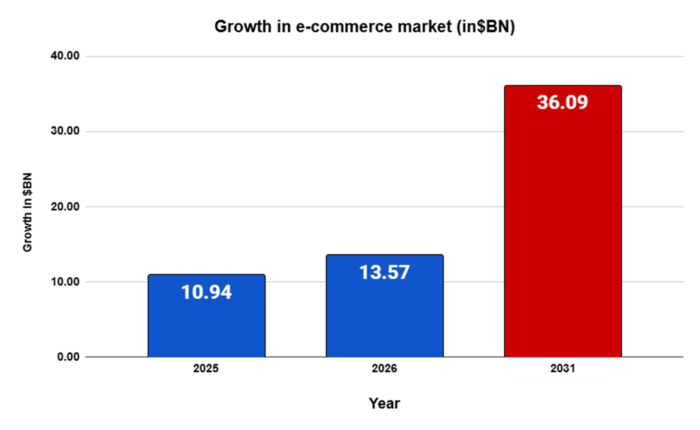
As India’s cross-border B2C e-commerce market is projected to grow from $13.57 billion in 2026 to $36.09 billion by 2031, MSMEs have a greater opportunity to reach overseas customers through digital channels.
To do so, MSMEs should build export supply chains around the target market, not just production capacity, factoring in product standards, duties, logistics, landed cost, packaging, and documentation from the beginning.
This blog article provides 10 ways for MSMEs to build stronger supply chains for global growth.
India’s cross-border B2C e-commerce market is projected to grow from $10.94 billion in 2025 to $13.57 billion in 2026, and further rise upto $36.09 billion by 2031.1 This growth reflects a market expanding in both directions: India is becoming a larger destination for premium global products while also strengthening as an export base for artisans, smaller manufacturers, and traders, to reach overseas customers through digital platforms without depending only on traditional large export channels. Marketplace-led selling is lowering entry barriers, while initiatives such as Dak Ghar Niryat Kendras are extending export access to smaller business clusters.
However, securing an international order is only the beginning. A dependable supply chain, from consistent sourcing and export-ready packaging to accurate documentation, viable shipping costs, and reliable logistical support, can determine whether an overseas buyer places a second order.
Recent events have also shown why supply chains need flexibility. The ongoing conflict in West Asia has affected India’s trade routes, while disruptions around the Strait of Hormuz have created uncertainty for shipping and supplies. The Government of India has responded by expanding trade agreements and export-promotion measures to support greater market diversification.
For MSMEs, this strengthens the case for looking beyond a small set of traditional destinations. Exports to ASEAN, Africa, and Oceania are already sizable, and new trade agreements are opening up further access. Australia offers zero-duty entry for Indian goods, the UK deal now gives near-complete tariff-free access, and an agreement with New Zealand is in the pipeline. MSMEs can therefore evaluate multiple destinations based on demand, trade access, freight costs, and product fit rather than relying on a single geography.
Against this backdrop, this blog post outlines 10 steps to help MSMEs build stronger supply chains for global growth.
1. Build the Supply Chain Backwards from the Export Market
A reliable export supply chain should begin with the market rather than with existing production capacity. MSMEs can first identify one destination, understand its requirements, and design the supply chain accordingly. This includes checking product classification, duties, local standards, labeling rules, documentation, delivery expectations, and payment terms.
The complete landed cost should cover raw materials, packaging, inland movement, customs handling, freight, insurance, duties, warehousing, and possible returns. DGFT guidance also recommends considering market size, competition, quality requirements, freight, accessibility, and trade agreements while selecting overseas markets.
2. Make Local Suppliers Part of the Export Plan
Export reliability begins before the final product leaves the factory or workshop. A delayed component or inconsistent raw material can affect production schedules and international delivery commitments. MSMEs can identify critical inputs and build backup suppliers for them. Supplier arrangements can clearly define quality, quantity, delivery schedules, and acceptable variations. Records of delays, rejection rates, price changes, and quality issues can help identify dependable vendors. For materials with long lead times, carefully planned buffer stock may reduce the risk of production stopping before an export dispatch.
3. Use Regional Export Infrastructure Instead of Depending Only on Major Metro Cities
MSMEs in smaller cities do not necessarily need to build their own large export infrastructure. Government-backed facilities can bring parts of the export process closer to local manufacturing clusters. E-Commerce Export Hubs are being developed to provide services such as warehousing, packaging, customs clearance, quality certification, and logistics support. Dak Ghar Niryat Kendras also help small businesses, artisans, and MSMEs in the hinterland use postal channels for cross-border e-commerce. More than 1,000 such centres had been established across India by December 20242.
4. Treat Packaging and Documentation as Part of the Supply Chain
A product that performs well domestically may require different packaging for an international journey. Export consignments can pass through several warehouses, vehicles, airports, ports, and handling points before reaching the customer. Packaging can be standardised around product weight, fragility, moisture sensitivity, shelf life, and destination requirements. Package size also matters because excessive dimensions can raise freight costs where volumetric weight applies.
MSMEs can also maintain a documentation checklist covering invoices, packing details, product classification, certificates, customs papers, and market-specific requirements. A repeatable process can reduce avoidable mistakes and delays.
5. Build Visibility from the Supplier to the Overseas Customer
A supply chain becomes easier to manage when businesses know where time and money are being lost. Even small MSMEs can build this visibility without investing in complex technology right away. The first step is simple: track key metrics like delivery times, delays, and costs, and keep purchase orders, inventory, and shipment status in one digital record instead of scattered across calls and messages. Over time, this visibility reveals recurring problems and helps businesses fix routes and processes before losses pile up.
6. Prepare Backup Options Before Disruptions Occur
Port congestion, geopolitical events, freight shortages, route changes, or regulatory restrictions can affect even well-planned international orders. Backup options therefore need to be identified before a shipment is already delayed.
MSMEs can maintain an alternative logistics partner for key routes and assess whether another port, airport, inland terminal, or transport combination is workable. Critical raw materials can also be classified according to how difficult they would be to replace. Export costing should leave some room for unexpected freight, insurance, or storage expenses so that a disruption does not immediately turn a profitable order into a loss.
7. Start with Smaller, Repeatable Export Routes Before Expanding
Global growth does not require a business to serve several countries from the beginning. A smaller, repeatable export route can be easier to understand and improve. An MSME can begin with one product category, one destination, and one logistics route. Early shipments can reveal actual freight costs, customs timelines, damage rates, returns, and payment cycles. Once sourcing, production, packaging, documentation, dispatch, and delivery become predictable, the process can be standardised. Additional products or markets can then be added gradually.
8. Match Working Capital with the Longer Export Supply Chain
Export orders can increase sales while also stretching the cash cycle. Businesses may have to pay suppliers, manufacture goods, hold inventory, package orders, and pay freight before receiving payment from an overseas buyer. MSMEs should calculate how long capital will remain tied up from the purchase of raw materials to payment realisation. Larger orders may require additional funds for inventory, machinery, packaging, freight, warehousing, or receivables.
Working capital can be arranged before production starts rather than after funds become tight. Depending on the business requirement, MSMEs can evaluate export credit, suitable insurance, and financing from an RBI-registered NBFC such as Protium.
9. Identify and Reach Potential Overseas Buyers
A supply chain should be built around genuine demand rather than assumptions about what an international market may buy. Finding suitable buyers early can help MSMEs understand expected volumes, specifications, prices, and delivery standards. Trade fairs, buyer-seller meets, exhibitions, B2B portals, Export Promotion Councils, Indian Missions abroad, and overseas chambers of commerce as channels for finding buyers. A clear digital presence with product catalogues, specifications, pricing, payment terms, and business credentials can also make it easier for overseas buyers to assess a supplier.
10. Use Product Sampling to Test Buyer Requirements Before Scaling
Sampling can provide a practical bridge between buyer interest and full-scale production. Instead of committing to a large order immediately, MSMEs can use customised samples to test whether the product meets the buyer’s expectations. Feedback can reveal required changes in specifications, materials, finish, quality, packaging, or labelling before they affect a larger shipment. Customised samples can help exporters secure orders and that bona fide trade and technical samples of freely exportable items are permitted without a limit under FTP 2023. Once the sample and initial order are accepted, the business can scale with greater clarity.
MSMEs that build one dependable route, track its economics, prepare alternatives, and scale only after the process becomes predictable can create a stronger foundation for sustained global growth.
—Source
1 Mordor Intelligence, India Cross-Border B2C E-Commerce Market Size & Share Analysis – Growth Trends and Forecast (2026–2031)
2 Ministry of Communications, Postal Export Centres, December 2024
___