
12 Actionable Steps for MSMEs to Increase Festival Sales and Maintain Cash Flow
- March 2026 offers strong demand across Holi, Eid, Ram Navami, and Gudi Padwa. Festival demand can increase billing, but the real outcome depends on whether collections stay on time, margins are protected, and post-festival dues do not pile up.
- This blog article provides practical steps to increase festival-season sales while protecting cash flow, managing inventory efficiently, and maintaining smooth operations from peak week execution to post-festival collections and repeat business.
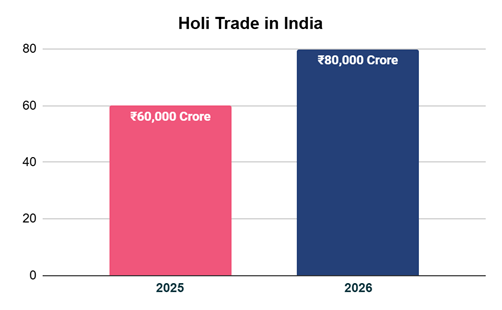
While Ganesh Chaturthi, Raksha Bandhan, Navratri, and Diwali are widely recognised as peak festival months, March also brings an intense demand cycle that can lift MSME sales in a short span. For instance, Holi trade is projected to cross ₹80,000 crore nationally in 2026, reflecting ~25% growth over last year’s estimate of ~₹60,000 crore1. Gudi Padwa also clocks robust business each year — 86,814 new vehicles were registered during the festival in 20252. With Eid and Ram Navami also set to be observed around the same time, March offers a compressed, high-intensity sales window where demand can spike quickly. This is because festival shopping is powered by a familiar set of customer motivations. Families spend on traditional rituals, gifting, celebrations, home upgrades, and personal indulgences.
For small businesses, the march festival rush can lift sales. However, it also squeezes cash flow, strains operations, and creates avoidable stockouts. As purchase decisions become faster, the willingness to try a new seller also increases when the product is available immediately, and the offer feels fair. Thus, the month can deliver the best outcomes when inventory, working capital, staffing, and offers move together. The focus needs to stay on profitable sales and timely cash recovery.
Festival-Wise Buying Trends and MSMEs that Can Benefit Most
Festivals do not create a uniform spike in demand. Each occasion pulls customers toward a different kind of purchase, and MSMEs typically see better results when promotions and stocking plans match the festival mood rather than running a single generic offer throughout the month. Holi buying is usually immediate and convenience-led, favouring fast-moving, quick-consumption items, low- to mid-ticket impulse buys, and social gathering essentials. Gudi Padwa and Ugadi often foster a “new purchase” mindset, nudging families toward home and lifestyle upgrades alongside traditional essentials. Eid demand typically intensifies closer to the date and leans heavily toward apparel, grooming, gifting, sweets, food, confectionery, and grocery-led purchases, as well as finishing services such as tailoring and alterations, where last-mile urgency plays a major role. Ram Navami demand is more localised and puja-linked, with sharper spikes near community markets and temple clusters.
A festival month in March can either run like a planned sales cycle or turn into a period of constant operational pressure. For MSMEs with small teams, limited storage, and tight working capital, the difference usually comes down to execution.
The steps below focus on actions that help small manufacturers, traders, retailers, and service businesses capture peak demand while maintaining cash flow, service quality, and delivery discipline.
- Lock the Top-Selling List First
MSMEs often lose festival sales not because demand is weak, but because the most common items run out during peak time. The month should begin with a short list of the 20–30 fastest movers, based on last year’s invoices and the last few weeks of sales. For a workshop, these might be the most frequently used sizes, colours, finishes, or spare parts, such as LED lights, polish kits, premium helmets, and so on, for vehicles or bedsheets, curtains, furniture, etc. for home decor. For a trader or retailer, it is typically the SKUs that customers ask for by name. These include grocery staples, sweets and snack packs, personal care basics, household cleaning essentials, puja kits, festive apparel best-sellers, and everyday accessories. Protecting these items usually delivers better returns than expanding the assortment.
- Create a Festival Forecast
Forecasting does not need complex tools. It works best when it combines what sold earlier with what customers are shifting toward this season. A practical method is to review last year’s festival-period sales, identify the top movers and the weeks when demand peaked, and then study what new products or variants have entered the market that customers are now preferring. Enquiry patterns, walk-in questions, WhatsApp requests, and competitor activity can then be used to adjust expected volumes for this season. This approach helps MSMEs forecast expected sales with more realism, especially for new or upgraded products, while reducing the risk of stockouts and excess inventory.
- Build Inventory According to the Festival
March inventory performs better when it is curated by a festival rather than treated as a single seasonal stock-up. Holi tends to drive fast-moving, high-consumption products, while Gudi Padwa/Ugadi lifts the “new purchase” categories and home upgrades. Eid demand often peaks closer to the date and needs stronger readiness in apparel, grooming, gifting, and finishing services, and Ram Navami typically drives puja-linked essentials with localised spikes. A festival-wise stock plan protects working capital by building depth where timing and demand are most predictable and reducing dead stock by avoiding a one-size-fits-all inventory approach. Supplier readiness matters equally in March, as suppliers also face a high workload. Timelines, backup vendors, and replacement cycles need to be locked in early for items that are difficult to source at short notice.
- Bundle for Higher Billing
Bundling is one of the simplest ways to lift average order value without relying only on discounts. Bundles work best when they feel natural and reduce customer effort. Festival sweets paired with dry-fruit add-ons can work well for gifting, while household stores can combine cleaning essentials with fragrance or small décor to match home-prep buying. For small manufacturers, a core product can be paired with accessories, consumables, or an installation kit. Combo packs and family packs also simplify customer decision-making and increase the bill size. In peak weeks, convenience often delivers stronger conversion than an actual discount.
- Plan discounts with guardrails
Discounts can attract customers, but uncontrolled discounting destroys margins and makes regular pricing harder to defend after the season. A practical guardrail is a discount ceiling by product type. Fast-moving essentials usually need smaller discounts and stronger visibility. High-margin add-ons can support slightly deeper offers. Limited-period deals create urgency without permanently lowering the perceived price. Gifts-with-purchase can also work when the free item is low-cost but high perceived value, such as festive packing, a small add-on, or a service benefit. Avoiding price dilution is equally important, so offers should feel seasonal and time-bound rather than permanent.
- Convert slow stock into clearance bundles
Festival footfall is an opportunity to clear ageing inventory, but the clearance must be structured. Deep random cuts teach customers to wait for discounts. A better approach is to bundle slow movers with popular items or create a “festive combo” that looks purposeful. Clearance works best when it is limited, time-bound, and tied to a bundle or minimum bill value. Visibility matters more than complexity in many local markets, so clear signage, counter displays, and product grouping often outperform long promotional messaging when customers are making quick decisions.
- Push pre-orders for predictable sales
Pre-orders reduce uncertainty, improve cash planning, and protect small teams from last-minute overload. Businesses selling gifting packs, bulk orders, made-to-order goods, tailoring, or customised products benefit the most. A basic pre-order system requires a clear product list, a cut-off date, a small advance, and a committed delivery slot. It also reduces cancellations because the customer’s intent becomes more concrete. In many Tier-2 and Tier-3 markets, pre-orders move faster when captured through simple WhatsApp flows, especially when the catalogue format is consistent and pricing is clear.
- Tighten receivable recovery immediately
Many MSMEs enter March with outstanding dues. That becomes risky because festival demand requires upfront spending on inventory, packaging, labour, and delivery. Recovering receivables before the peak weeks improves liquidity without adding borrowing. A disciplined approach includes a shortlist of top overdue accounts, regular follow-up slots, and settlement options, such as structured part-payments, to streamline cashflows.
- Control credit sales during the rush
Festival periods often increase credit requests, especially from new customers who want quick delivery. Caps for new customers, shorter payment cycles, and customer-wise outstanding limits reduce post-festival stress. Credit can still be offered, but it usually works best when it is selective and recorded, not informal. This also helps prevent post-festival dues from piling up when demand cools and the market returns to normal cycles.
- Offer quick and easy payment options to customers
A surprising amount of festival leakage comes from slow billing, confusion at the counter, and payment delays. Fast billing protects conversion when queues build up. Visible UPI options reduce checkout friction. Quick invoicing also improves reconciliation, which matters when daily volumes rise suddenly. Payment verification discipline matters most when digital payments rise, and confirming actual receipt, not screenshots, reduces fraud risk.
- Strengthen fulfilment discipline
During festivals, customers are less forgiving about delays and damaged packaging. Fulfilment discipline is what turns festival buyers into repeat customers. Packing checks, standard packing materials, clear cut-off times for delivery, and realistic promises prevent disputes. For workshops and manufacturers, this also means batch marking, basic quality checks, and a replacement policy staff can explain confidently. Operationally, handling high inquiry volume often requires a basic split of roles: one person responding to messages, one handling packing, and one managing billing and dispatch. Local delivery readiness also needs clear cut-off times, route planning, and proof of delivery to reduce disputes. Returns and exchanges should follow a clear process so daily operations are not disrupted by post-sale issues. Order acceptance discipline also matters, and stopping at capacity can feel difficult in the moment, but it protects reputation, which is a long-term asset in local markets.
- Run a post-festival retention plan
The month should not end with the last sale. A follow-up within 7–10 days often converts first-time buyers into repeat buyers. Retention can be built through service reminders, repeat purchase offers, loyalty credits, or a “thank you” benefit valid for the next 30 days. Post-festival discipline also decides whether March profits stay intact, so collections and cash recovery should begin immediately, not weeks later. Supplier payment planning needs clarity so relationships remain stable, and inventory cleanup should happen with purpose based on what moved and what got stuck. A quick review of what sold, what got delayed, what improved margins, and what needs change next year completes the cycle and sets the business up for the next peak season.
While the above steps ensure optimal business, small enterprises must also remember that festival demand can create instant stockouts. At the same time, overbuying can trap cash after the month ends. A disciplined plan will help them stay flexible while staying ready for sudden spikes.
Inventory and Procurement Plan
The key is to separate “must-have” products from “nice-to-have” ones, and then protect the availability of the first category.
Minimum stock rules work best when they are simple. The top sellers need a buffer that can handle sudden daily spikes. Low-moving items need strict limits, even if the unit margins look attractive. Supplier readiness matters equally in March, as suppliers also face a high workload. Timelines, backup vendors, and replacement cycles need to be locked early, especially for items that are difficult to source at short notice.
Packaging often decides whether impulse buyers convert. Gift wraps, boxes, carry bags, labels, and standard sizes reduce friction. For workshops and manufacturers, micro-production planning is critical during this month. Batch sizes, buffer stock, and daily output targets should reflect the two-round inventory method so the business can replenish quickly without creating waste.
Accounting for Logistics Readiness
Logistics readiness also becomes a deciding factor during the festival time, especially when customers expect quick delivery and time-bound gifting. MSMEs can reduce delays by aligning early with logistics partners on pickup schedules, serviceability, and expected peak-day cut-offs. Where local delivery is a key driver, quick delivery options can be offered through short-radius routing, and additional capacity can be created by hiring gig workers for packing, dispatch support, and last-mile drops. MSMEs can also consider registering as online sellers on relevant marketplaces or local commerce platforms to widen their reach during the festival period, especially for standardised products that can be shipped quickly with consistent packaging.
March 2026 can be a strong festival month for MSMEs, but the outcome depends less on the demand spike and more on execution. Businesses that protect fast movers, plan festival-wise inventory, structure offers without hurting pricing, and keep billing and delivery disciplined are more likely to convert peak-week footfall into profitable sales.