
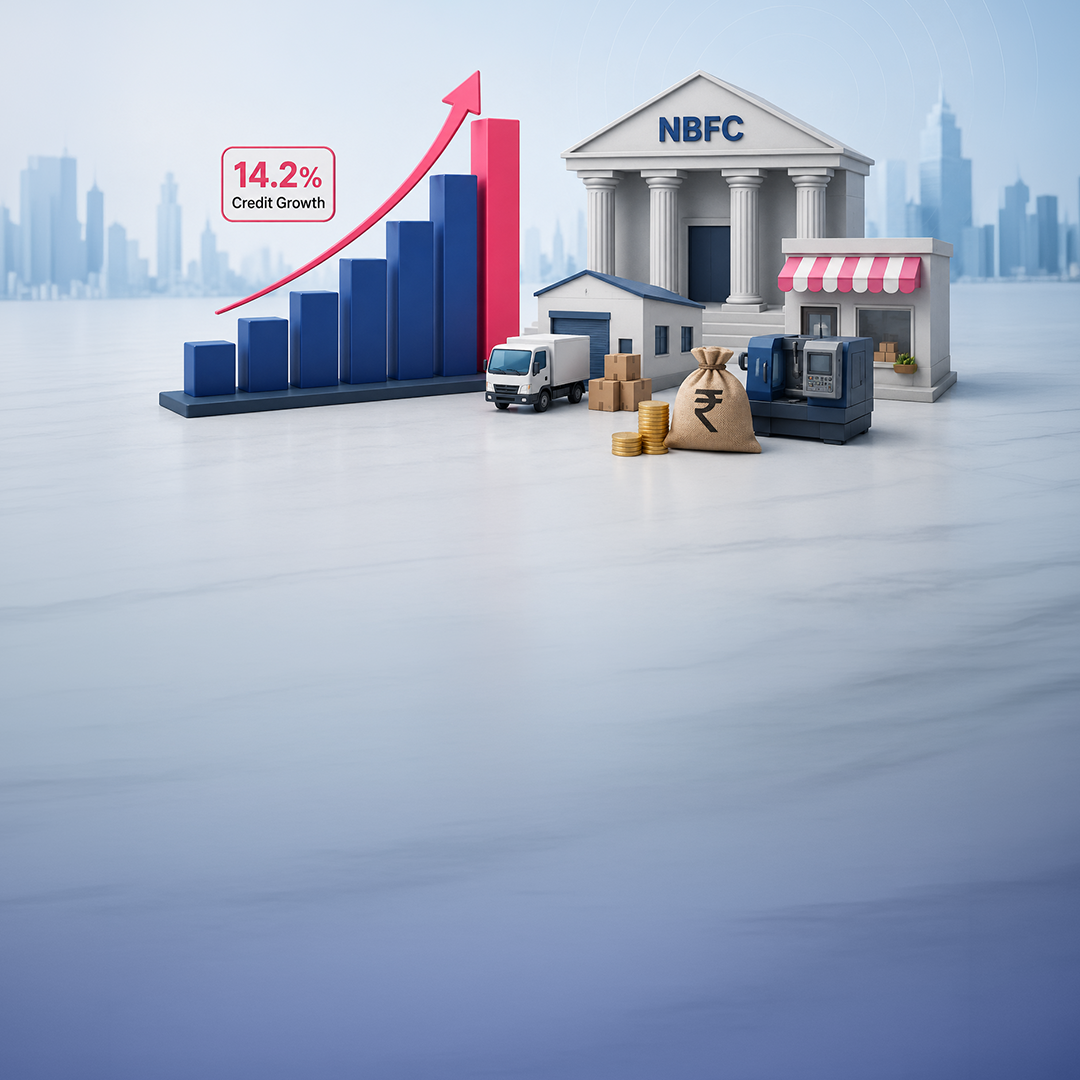
As NBFC credit grew by 14.2% year-on-year in May 2026, India’s banking sector would need to have at least 30% more lending capacity to meet total MSME credit demand. This highlights the need for more formal lending options for underserved businesses.
An increasing number of MSMEs are turning to NBFCs for faster and more practical lending, as these financial institutions can look beyond conventional collateral and assess GST records, bank transactions, invoices, seasonal cash flows, supplier relationships and actual business requirements. Their digital processes and focused documentation can also help eligible businesses access finance faster. This blog article delves deeper into the areas that are pushing MSMEs towards them and why they should continue doing so.
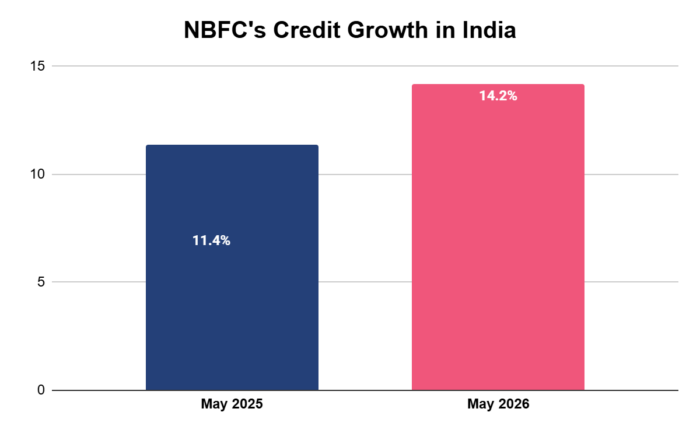
Credit extended by NBFCs grew by 14.2% year-on-year in May 2026, up from 11.4% a year earlier, reaching about ₹58.6 lakh crore1. This growth highlights the sector’s expanding role in India’s credit ecosystem and positions NBFCs as an important driver of the country’s next phase of credit growth. MSME lending is a key part of this opportunity, as many small businesses continue to remain underserved by traditional lenders. The gap is significant, as India’s banking sector would need to have at least 30% larger lending capacity to fulfil total MSME credit demand2.
This makes MSME lending one of India’s biggest long-term credit opportunities. The opportunity lies in reaching regular businesses with genuine requirements that may not fit traditional lending methods. This is where NBFCs can help by looking more closely at how the business works.
Why NBFCs Are Well Positioned to Bridge the MSME Credit Gap
NBFCs are often associated with faster approvals, flexible financing, and a range of loan options. Their larger advantage is the ability to assess businesses through their actual operating conditions. Unlike a standard lending approach that may focus mainly on collateral, financial statements and credit scores, NBFCs can examine how an MSME functions in practice. This is important because small businesses do not always have steady monthly sales or large assets to offer as security. Their income may depend on local demand, seasonal orders, customer payment cycles and relationships built over several years. By studying these factors, NBFCs can develop a more complete understanding of the business and its ability to repay the loan.
This approach may include:
- Understanding local business cycles: MSMEs often operate within specific local or regional markets. For instance, an agricultural equipment dealer may see higher demand before sowing or harvesting periods and businesses located in manufacturing clusters may receive regular orders from nearby factories. Understanding these local cycles helps the lender assess why sales rise or fall during different parts of the year.
- Assessing seasonal cash-flow needs: A business may be profitable but still face a temporary shortage of funds. For example, a retailer may need to purchase stock several weeks before the festive season but receive most of the sales income only after the season begins. A manufacturer may have to buy raw material and pay workers before receiving payment from the customer. NBFCs can examine these timing gaps and understand whether the business requires short-term working capital rather than treating uneven monthly cash flow as a sign of poor performance.
- Recognising dealer and supplier relationships: Many MSMEs build their businesses through long-term relationships with suppliers, dealers, distributors and customers. A business that has worked with the same suppliers for several years, receives regular credit from them or repeatedly supplies products to established buyers may have a stable operating network. These relationships can help demonstrate that the business is active, dependable and capable of continuing its operations even when formal documents alone do not show the full picture.
- Evaluating machinery and capacity requirements: MSMEs frequently seek finance to purchase machinery, replace old equipment or expand production capacity. Instead of looking only at the cost of the machine, the lender can assess how the investment may benefit the business. A new machine may increase daily output, reduce production time, lower wastage, improve product quality or allow the business to complete larger orders. This helps the lender understand how the loan may contribute to future revenue and repayment capacity.
- Looking beyond conventional collateral: Many established MSMEs may have regular sales and strong customer relationships but may not own property or other high-value assets. In such cases, NBFCs can consider alternative business information such as GST returns, bank statements, digital transactions, invoices, receivables and the number of years the business has been operating.
This wider assessment does not mean that documentation or credit checks are ignored. It means that the lender considers both formal records and the actual working pattern of the business. For MSMEs, this can make credit assessment more relevant to their real operating conditions. This is because GST records can show reported sales and business continuity. Bank statements can show regular inflows, supplier payments and existing loan obligations. Invoice data can show sales activity and receivables. Digital transactions can create a clearer record of day-to-day performance.
As a result, formal credit is gradually moving from only collateral-led assessment towards cash-flow-led assessment. This allows a lender to check whether the business can generate enough regular income to manage the repayment. They also allow MSMEs to build a credit profile through operations, not only through owned assets. Cash-flow-based lending can also support more customised repayment terms based on the requirements of the business.
For business owners, this makes record-keeping more valuable. Every formal invoice, bank transaction, GST filing and timely repayment strengthens the financial track record of the business.
Why NBFC Loans Are Often Processed Faster
Speed is one of the major reasons why many MSMEs consider NBFCs. A delayed loan can mean losing a bulk order, missing a seasonal sales period or postponing an important machine purchase. NBFCs can often process applications faster because many parts of the journey are digital. Applicants may submit details, documents and bank information online. Digital checks can reduce repeated branch visits and shorten basic verification.
NBFCs may also ask for a focused set of documents based on the loan product. Direct customer involvement can help the lender understand the requirement, use of funds and expected repayment. An RBI-regulated NBFC, Protium Finance Ltd, for example, highlights minimal documentation, quick approval and disbursal, and dedicated assistance at every stage for its business loans. It also uses digital processes and offers business finance based on eligibility and assessment. This can help MSMEs that need speed and support.
However, faster processing does not mean guaranteed approval. The business must still meet the lender’s eligibility, documentation, credit and risk requirements.
Responsible Lending Will Drive Sustainable Growth
Finance should be linked to a genuine business requirement. The amount should match the expected use, whether it is stock, machinery, working capital, renovation, technology or order execution.
Better risk assessment is more useful than simply easier lending. When lenders understand the business cycle and cash flow, they can structure the loan more appropriately. The repayment amount and tenure should not put unnecessary pressure on daily operating expenses.
Transparent pricing is equally important. MSMEs should understand the interest rate, processing charges, repayment schedule, late-payment charges, foreclosure conditions and total borrowing cost before accepting an offer.
Stronger credit guarantee frameworks can also support MSME lending by reducing part of the lender’s risk in eligible cases. However, a guarantee should support proper assessment, not replace it. Government-backed credit guarantee systems are designed to improve formal credit access for eligible micro and small enterprises, including businesses that may not have sufficient conventional collateral.
How MSMEs Can Prepare for Better Credit Access
While lenders are improving their methods, MSMEs must also become more credit-ready. An organised business can make assessment easier and reduce avoidable delays.
Business owners can take the following steps:
- Maintain updated GST returns, income records and financial statements.
- Keep Udyam Registration, PAN, address proof and business documents updated.
- Organise bank statements and maintain clear cash-flow records.
- Keep supplier bills, customer invoices, receivable details and order records safely.
- Prepare a simple plan showing how machinery, equipment or expansion will improve the business.
- Borrow according to the actual requirement, not the maximum amount offered.
- Compare lenders based on transparency, repayment flexibility, charges, service and understanding of the business.
MSMEs should also check whether the proposed EMI can be paid during strong and weak business months. Existing loans and monthly commitments must be considered before taking fresh finance.
The rise of NBFC credit shows that India’s lending ecosystem is becoming more responsive. For MSMEs, the real benefit will come when faster processes and flexible products are combined with responsible borrowing. The right loan should help manage cash flow, improve capacity and support growth.
—
1 Reserve Bank of India data for May 2026
2 Deloitte, State of Financial Services in India (SOFSI) Report, June 2026
—