
World Chocolate Day: 8 Practical Ways MSMEs Can Tap India’s ₹25,620 Crore Market
The Indian chocolate market is projected to grow at a CAGR of 7.01% from 2026 to 2033, indicating strong long-term demand for the category and creating opportunities for MSMEs across manufacturing, packaging, storage, distribution, gifting, and local retail supply. However, cocoa price changes, heat-sensitive storage, transport issues, packaging quality, FSSAI compliance, labelling, and competition from traditional sweets can affect margins, product quality and customer trust.
On World Chocolate Day, MSMEs can consider 8 practical ways to tap into the market. These include keeping the product range focused, building around local taste, using gifting as a growth channel, carefully planning pricing, using local channels before scaling, testing demand digitally, maintaining quality records, and improving packaging, inventory, and storage.
The Indian chocolate market reached approximately ₹25,620 crore in 2025 and is projected to reach ₹47,208 crore by 2034, growing at a CAGR of 7.01% from 2026 to 2033 1. The growth has been attributed to the rapidly rising disposable income, urbanisation, and changing customer preferences. Chocolates have usually been seen as a simple confectionery bought for children or during festivals. However, demand is now growing for Indian-made chocolates and confectionery products that focus on better ingredients, local flavours, premium gifting and craft-led production. A more ingredient-conscious middle class is also showing interest in chocolates made from scratch, starting from the cacao bean itself.
This shift has created an opening for Indian chocolate makers and established MSMEs in the food business. The opportunity is not only in selling regular chocolate bars. It also lies in building focused product ranges, using Indian cacao, creating healthier chocolate alternatives, offering tasting-led experiences and serving customers who want locally made products with a clear story.
This World Chocolate Day, here’s a look at how domestic chocolate makers and small businesses can tap this growing market in a more focused way.
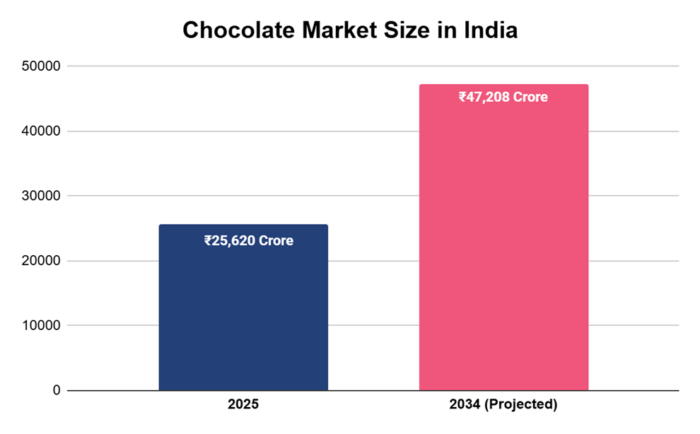
Source: IMARC, November 2025
Reasons for the Growing Popularity of Chocolates
Until recently, the market was dominated by a few large multinational players who controlled 80% of the share, or a handful of Indian legacy brands that occupied 2-3% of the market2. Most customers bought what was easily available in nearby stores. The products were familiar, affordable and made for mass demand. But now, the market is broader, more local, and open to new ideas.
A growing group of consumers is now exploring Indian-made chocolates, artisanal chocolates and bean-to-bar products. These consumers are becoming more aware of the difference between industrially made chocolate and chocolate made from scratch, starting from the cacao bean. In craft or bean-to-bar chocolate, the quality depends on sourcing, fermentation, roasting, grinding, tempering and molding.
Modern chocolatiers are also changing how chocolate is made and presented. Many are working with Indian-origin cacao, single-origin beans, small-batch production, slow roasting, low-heat processing, careful refining and clean formulations. Some focus on dark chocolate, vegan options, reduced sugar formats, chocolate-coated nuts, drinking chocolate, bonbons, truffles, filled bars and gifting collections. This is very different from regular mass-market chocolate because the focus is on the cacao, the process and the final eating experience.
Indian chocolate makers are also using flavours that connect with local tastes. Nuts, fruits, spices, coffee, tea-inspired flavours, coconut, hazelnut, matcha-coconut combinations and regional ingredients are helping small brands create chocolates that feel familiar but still new. This gives MSMEs a practical way to stand apart from regular chocolate products.
Demand for increased chocolate consumption is also moving beyond metros. Rural markets account for 35% of retail chocolate sales and are expected to grow faster at 8% annually due to wider distribution networks, affordable pack sizes and better retail access3.
The chocolate business has strong potential but also practical challenges. MSMEs must understand these challenges before expanding into this market.
MSMEs that Can Benefit from the Indian Chocolate Boom
The growth of Indian-made chocolate does not support chocolate makers alone. It can also create opportunities for many related MSMEs across the value chain. As more chocolatiers focus on craft, quality and origin, they need reliable partners for cacao, processing, ingredients, packaging and retail experiences.
Single-Origin Cacao Farms and Certified Growers
Single-origin cacao farms and certified cacao growers can play an important role in this shift. Indian chocolatiers are increasingly interested in cacao that has a clear origin, better fermentation, careful drying and consistent quality. This creates opportunities for farms, farmer groups and post-harvest processing units that can supply better beans to chocolate makers.
Roasters, Grinders and Processing Units
Roasters, grinders, and small processing units can also find a place in the value chain. Craft chocolate depends heavily on slow roasting, low-heat processing, careful grinding and controlled refining. MSMEs that understand these processes can support chocolate makers with better consistency and smaller batch requirements.
Ingredient Suppliers
Dealers in nuts, fruits, spices, coffee, tea, coconut, hazelnut, matcha, jaggery and other natural ingredients can work with chocolate makers who want to build local and premium flavour combinations. These suppliers can support seasonal collections, health-focused variants and regional flavour-led products.
Ethical and Sustainable Packaging Units
Ethical manufacturing is becoming a major part of new-age chocolate businesses. Many modern chocolatiers want packaging that reflects their values. This creates demand for biodegradable packaging, upcycled paper, recyclable wrappers, plastic-free boxes and low-waste gifting formats. For packaging MSMEs, this is an opportunity to move beyond standard boxes and offer solutions that align with the zero-waste or responsible sourcing goals of chocolate makers.
Cafes, Events and Experience-Led Retail Partners
Experience-led selling can create additional opportunities. Cafes, local event organisers, food festivals, workshop spaces, farm tourism partners and retail pop-up venues can all work with chocolate makers. Tastings, bean-to-bar workshops, farm visits, and live chocolate-making sessions can help customers better understand the product. This makes chocolate more than a purchase. It becomes a learning and discovery experience.
While the chocolate business has strong potential, MSMEs must plan around a few practical challenges before scaling. Cocoa price changes can affect margins and pricing decisions, especially for businesses that use higher-quality cacao or single-origin beans. Chocolate is also heat-sensitive, so storage and transport must be carefully managed to protect its shape, texture and taste. Packaging must protect freshness and reflect the product’s quality, especially in premium and craft-led formats. Small manufacturers must also comply with FSSAI standards, labelling rules, and hygiene requirements to build credibility. Competition from traditional sweets remains strong during festivals and family occasions, so Indian chocolate makers must position their products clearly as premium gifts, healthier alternatives, tasting-led products, or locally made craft chocolates.
8 Practical Steps for MSMEs to Tap into the Growing Chocolate Business
MSMEs looking to expand in the chocolate business should begin with clear planning. The market is growing, but established small businesses need a focused approach to protect margins, reduce waste and build customer trust. Indian chocolate makers can grow by building sharper product ranges, using local ingredients, educating customers and creating stronger buying experiences.
1. Build a Focused Product Range
Small businesses should avoid adding too many products while scaling. A focused range is easier to manage, improve and repeat with consistent quality.
MSMEs can build around a few clear categories such as dark chocolate bars, filled chocolates, nut-based chocolates, drinking chocolate, chocolate-coated nuts, bonbons, truffles, low-sugar options, vegan chocolates or portion-controlled packs. Health-focused alternatives can also be explored, such as high-cocoa bars, lower-sugar formats and products with clearer ingredient lists.
The aim should be to create products that suit customer demand without making production too complex.
2. Highlight Indian Cacao and Local Ingredients
Indian chocolate makers can stand out by building products around Indian cacao, local flavours and familiar ingredients. This can include nuts, fruits, spices, tea-inspired flavours, coffee, jaggery, regional fruit flavours or festive ingredients.
For craft-led chocolate makers, the process can become part of the value. Customers are becoming more interested in where the cacao comes from, how the beans are processed and why one chocolate tastes different from another. MSMEs can use this interest to create a stronger product story.
The focus should remain simple. Instead of only saying “premium chocolate,” small businesses can explain whether the product uses Indian cacao, higher cocoa content, lower sugar, handmade processes or local flavour combinations.
3. Use Gifting as a Strong Growth Channel
Gifting remains one of the most practical growth routes for chocolate MSMEs. Chocolates are easy to customise and work well for festivals, weddings, birthdays, office gifting and personal celebrations.
Small businesses can create festive hampers, wedding return gifts, corporate gift boxes, tasting boxes and seasonal collections. They can also offer different price points, such as smaller boxes for retail customers and larger curated hampers for companies.
For Indian chocolate makers, gifting should not depend only on decorative packaging. The product story, flavour selection, freshness and presentation should all work together.
4. Plan Pricing Carefully
Clear pricing is important in the chocolate business. MSMEs should account for cacao, ingredients, packaging, wastage, storage, delivery, platform charges and labor before deciding the final price.
Craft and bean-to-bar chocolate may have higher input and process costs. This must reflect in pricing. A product may look profitable at first, but hidden costs can reduce margins. Proper pricing helps small businesses protect cash flow and avoid selling at a loss.
5. Use Local Events and Experience-Led Channels Before Scaling
Retail sales remain important, but Indian chocolate makers should not depend only on supermarkets and traditional stores. Local events can help small businesses build discovery and direct customer feedback.
MSMEs can participate in food festivals, flea markets, chocolate festivals, farmers’ markets, cafe pop-ups, school events, wedding exhibitions and local business fairs. These channels allow customers to taste the product, ask questions and understand the difference between regular chocolate and craft-led chocolate.
Such events are especially useful for newer flavours, premium bars, healthier chocolate options and gift boxes. They help MSMEs understand which products attract attention, which price points work and which customer segments are more likely to repeat orders.
6. Use Digital Platforms to Educate and Test Demand
Digital platforms can help small chocolate businesses reach customers beyond their immediate locality. MSMEs can begin with social media, WhatsApp orders, online marketplaces and direct-to-consumer models.
For Indian chocolate makers, digital content should not only show the final product. It can also explain the process. Short videos on cacao beans, roasting, tempering, flavour testing, customer tastings, workshop clips and behind-the-scenes production can help customers understand the effort behind the product.
These channels also help businesses track popular flavours, repeat orders, seasonal demand and customer feedback. This makes production and inventory planning easier.
7. Maintain Quality, Records and Compliance
Batch-level records should be maintained for quality control and repeatability. These records help a business track what was made, when it was made, which ingredients were used and how the batch performed.
This is especially important for craft chocolate and small-batch production because slight changes in roasting, tempering, storage or ingredients can affect taste and texture. If there is a quality issue, the business can identify the problem faster.
Product labels should be clear, simple and compliant. Small manufacturers must also follow FSSAI standards, labelling rules and hygiene requirements. This builds credibility and supports repeat buying.
8. Build Customer Experiences Around Chocolate
Chocolate makers can also build demand through customer experiences. Workshops, tasting sessions, live chocolate-making demonstrations, factory visits, farm visits and cacao education sessions can help customers understand the product better.
Such experiences make chocolate more than a regular purchase. They help customers see the effort behind sourcing, roasting, tempering and flavour development. For MSMEs, this can build stronger brand recall and customer loyalty.
In smaller cities, these activities can be done through cafes, schools, clubs, food communities, local events or weekend workshops. They can also support premium gifting, repeat orders and word-of-mouth marketing.
India’s chocolate market is growing through changing tastes, stronger interest in Indian-made products, wider retail access, digital selling and premium gifting. For MSMEs, the opportunity is now more focused on Indian chocolate makers who can build around cacao quality, local ingredients, healthier alternatives, customer education and stronger product experiences. With focused product ranges, clear pricing, quality control, compliant labelling, local event participation and better customer engagement, MSMEs can tap into this growing category in a practical and sustainable way.
————
1 IMARC, November 2025
2 IBEF, Decoding the Growth of India’s Chocolate Market, November 2025
3 Astute Analytica, March 2025
4. IMARC
5 Mordor Intelligence India Chocolate Market Size & Share Analysis (2026 – 2031)