

9 Practical Ways MSMEs Can Prepare for Repeated Shocks and Crises
MSMEs have faced prolonged external pressures such as COVID-19, geopolitical tensions, tariff uncertainty, rising supply chain disruptions, and the ongoing West Asia war crisis. While they may not be able to control these conditions, they can prepare for them by strengthening financial planning, payment discipline, market diversification, and internal systems.
This blog articles lists ways small businesses can build repeatable resilience in a crisis-prone business environment
Business disruptions have become a frequent occurrence for MSMEs since the COVID pandemic. During the lockdown, over 49% of micro-enterprises in G20 nations reported a lack of cash to cover expenses1 and over 90% of MSMEs reported a decline in turnover2. In the years that followed, small businesses continued to face pressure from geopolitical tensions, tariff uncertainty, rising freight costs, and supply chain delays.
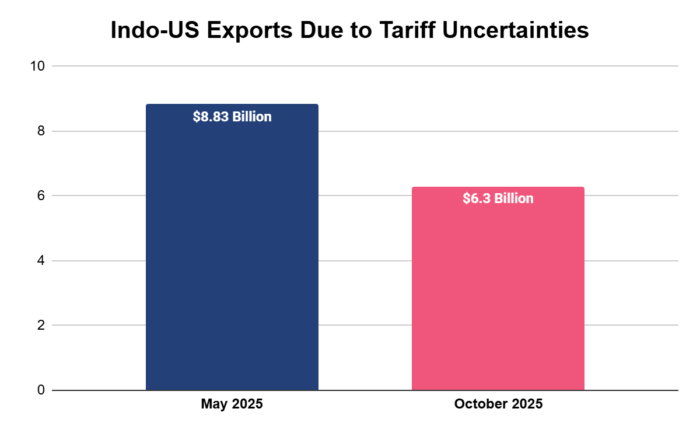
The Russia-Ukraine war pushed up energy, food, and raw material costs, with India’s Wholesale Price Index inflation at 13.11% in February 2022 and crude prices rising 55.17% that month3. The Red Sea crisis then increased shipping costs for MSMEs by 12% to 15%, while India’s merchandise exports fell 9.3% in August 2024, and petroleum product exports dropped by over 37% due to shipping disruptions4. Tariff uncertainty added to the pressure, with Indo-US exports falling 28.5% from $8.83 billion in May 2025 to $6.31 billion in October 20255. By March 2026, the West Asia conflict had created further strain, with India’s goods exports expected to decline 7% to 8% for the month and 2% to 3% for FY20266.
The concern is not limited to the demand slowdown. Liquidity and cash flow are often the deeper issues. These disruptions have shown that business stress is not always domestic or seasonal. It can come from shipping routes, export markets, conflict zones, insurance costs, and sudden changes in global trade conditions.
This is why MSMEs need to be more resilient, along with emergency support. The first impact of any crisis response cannot begin only after payments are delayed, shipments are stuck, buyers slow down orders, or raw material costs rise. The next stage of MSME growth will depend on consistent resilience: the ability to absorb shocks again and again without stopping operations. It requires stronger cash visibility, clear payment terms, wider customer bases, better product quality, digital records, and planned financing. For MSMEs in Tier-2 and Tier-3 cities, this is especially important because access to quick capital, alternate buyers, and specialised advisory support may be limited compared to larger metros.
In this blog article, MSMEs can learn nine practical ways to build repeatable resilience in a crisis-prone business environment.
1. Build a One-Year Financial Buffer
A financial buffer gives MSMEs breathing room when sales slow down, payments get delayed, or input costs rise. This does not mean every small business must keep one full year of expenses in cash immediately. It means the business should know its survival cost and build reserves gradually.
The first step is to calculate monthly fixed costs. This includes rent, salaries, loan repayments, electricity, supplier dues, GST payments, machinery maintenance, loan repayments if any and basic raw material commitments. Once this number is clear, the business can estimate how much it needs to survive for three months, six months, and one year.
Profitable business periods should not be treated only as expansion opportunities. They should also be used to create reserves. Even a small fixed transfer into a separate business reserve account can help over time. This reserve should not be used for routine spending or personal withdrawals.
MSMEs should also keep emergency working capital options ready before stress begins. Updated GST records, bank statements, invoices, repayment history, and business registrations can help lenders assess the enterprise faster during a difficult period.
2. Strengthen Payment Terms, Not Just Client Relationships
Strong relationships are useful, but they do not always protect MSMEs during stress. In many sectors, buyers delay payments despite long-standing relationships. Suppliers may also tighten terms when their own costs rise. This is why MSMEs need transparent and strict receivables and payables discipline.
Every business should define payment terms before accepting an order. These terms should include advance payment, credit period, delivery milestones, due date, late payment follow-up process, and documentation requirements. If the buyer is large or the order is customised, the business should avoid carrying the full working capital burden alone.
Clear terms improve buyer-supplier relationships because both sides understand expectations. When payment timelines are known, production planning becomes easier. Supplier commitments can be managed better. Financing needs can also be estimated before the order is accepted.
MSMEs should classify customers by payment behavior. Reliable clients can receive standard credit terms. New clients may require partial advance. Slow-paying buyers should have tighter order limits. Long credit periods should not be offered automatically to every customer.
3. Focus on Quality as a Strong Shield
During difficult periods, buyers become more selective. They may reduce order sizes, compare suppliers more closely, or shift to vendors who deliver with fewer errors. In such conditions, quality becomes a resilience tool. For small manufacturers, quality does not always mean expensive certification at the first stage. It can begin with simple inspection systems, batch records, standard packaging, basic testing, defect tracking, and production checklists. A trader can improve resilience by sourcing consistently and avoiding unreliable suppliers.
Quality also supports better pricing. MSMEs that compete only on low cost are often the first to face pressure when buyers negotiate during slowdowns. Businesses that offer reliable quality, timely delivery, and fewer complaints are better placed to retain customers even when demand weakens.
4. Diversify Products, Services, and Markets
One product, one buyer, or one market can make an MSME vulnerable. If that demand source slows down, the entire business is affected. Diversification helps reduce this risk, but it should be practical and connected to existing strengths.
A textile unit can add finished products along with fabric supply. A component manufacturer can serve two or three industries instead of depending on one buyer category. A food processing unit can explore institutional supply, retail packs, and online channels. A service provider can create subscription-based support instead of relying only on one-time assignments.
The shift from B2B to B2C can also help some MSMEs. Saravanan Power Looms shows how diversification can support resilience. The Salem-based textile business expanded from 2 handlooms to 38 power looms, added its own textile shop, Mathan Textiles, and increased sales from 500 to 4,000 sarees per month. By moving beyond only assigned production and building its own retail channel, the business created a stronger base to handle demand shifts and scale with more control.
5. Use Technology and Shared Infrastructure
Technology should not be seen only as a large investment. For most MSMEs, resilience begins with basic digital discipline. Digital billing, inventory tracking, receivables monitoring, supplier records, payment reminders, and customer databases can give the business owner better control.
When records are clear, decisions become faster. The business can see which products are moving, which customers are delaying payments, which suppliers are becoming expensive, and where working capital is blocked. This also helps during loan applications because lenders need reliable business data.
Shared infrastructure can reduce the cost of modernisation. Common Facility Centers, plug-and-play industrial facilities, testing support, design centers, and cluster-based infrastructure can help smaller businesses access resources that may be too expensive to build alone. For a small unit, shared machinery can improve production capacity. For an exporter, testing and packaging support can improve buyer confidence.
6. Expand into Nearby Supportive Markets
Expansion should not happen only because rent is low or space is available. MSMEs should study whether a nearby market has the right ecosystem. This includes demand, logistics, suppliers, skilled workers, financing access, industrial clusters, and buyer concentration.
Nearby expansion is often safer than distant expansion. It allows the business to use existing supplier relationships, monitor operations more closely, and grow without stretching management capacity. A manufacturer can explore nearby industrial towns. A trader can expand into adjacent districts. A service business can target nearby cities where demand is rising but competition is manageable.
Cluster-led expansion can also reduce risk. In a cluster, businesses may have access to transporters, repair services, workers, suppliers, packaging vendors, and technical knowledge. This ecosystem can help MSMEs operate more efficiently during stressful periods.
VSK Online Services shows how expansion also depends on storage, inventory, and product range. The business had started with limited capital of ₹25,000 and could sell only up to 50 bean bags due to low inventory and lack of space. With Protium’s business loan, it expanded from a home-based setup to a warehouse, increased bean bag inventory, and diversified into around 1,000 pieces of men’s apparel such as shirts and trousers, creating a stronger base to serve wider local and nearby demand.
7. Plan for 5–10 Years, Not Only the Next Order
Many MSMEs plan around the next order. This is understandable, especially for small enterprises where daily cash flow matters. However, a business that grows only order by order can make risky decisions during demand spikes.
A sudden large order may lead to the purchase of machinery, hiring workers, or borrowing. If demand does not continue, the business may be left with high fixed costs. Long-term planning reduces this risk.
MSMEs should prepare phased plans for capacity, machinery, manpower, markets, finance, and technology. A five-year plan can show what the business needs to strengthen first. A 10-year view can help determine whether the enterprise should remain local, expand regionally, enter export markets, or add new product categories.
The business should also build systems that do not depend entirely on the owner. Production checks, accounts processes, customer follow-ups, purchase approvals, and payment reminders should be documented.
8. Improve Liquidity Discipline
Liquidity discipline is central to crisis resilience. A profitable business can still struggle if cash is stuck in receivables. This is why MSMEs should track receivables weekly, not only at month-end.
A simple receivables sheet can include invoice date, buyer name, amount, due date, follow-up date, expected payment date, and delay status. Payables should be tracked in the same way. This helps the business owner understand what needs to be collected and what must be paid first.
MSMEs should avoid using emergency borrowing for regular cash gaps caused by weak collection discipline. Borrowing for machinery, expansion, or working capital should be planned according to cash flow. Emergency borrowing should be kept for genuine stress events.
9. Use Policy Support Before the Crisis Peaks
Policy support is often used after stress becomes visible. MSMEs should use it earlier. Schemes for credit, delayed payment resolution, receivables discounting, cluster support, modernisation, skilling, and market access can be useful during normal periods as well.
For example, TReDS can help MSMEs finance trade receivables from corporates, government departments, and public sector undertakings through multiple financiers. The government has also reduced the turnover limit for mandatory onboarding of corporates and CPSEs on TReDS to ₹250 crore.
Businesses should keep documents ready for such support. This includes Udyam registration, GST records, bank statements, invoices, licenses, loan details, machinery records, and buyer agreements. When these records are organised, MSMEs can act faster during stress.
Policy support works best when the business already has internal discipline. A scheme can provide access, but the enterprise must have records, repayment capacity, and execution strength.
Source–
1 G20/OECD-INFE report Navigating the storm
2 Journal of Small Business Strategy
3 Ministry of Commerce & Industry’s WPI press release, February 2022.
International Journal for Multidisciplinary Research (IJFMR)
4Global Trade Research Initiative (GTRI) Report5 Federation of Indian Export Organisations
5 Federation of Indian Export Organisations