
Make in India to Sell in India: The New Growth Path for MSMEs
Make in India has strengthened India’s manufacturing base, while Sell in India can help MSMEs convert this production strength into wider domestic growth. For small businesses, the opportunity is not limited to manufacturing more products. It also lies in reaching more buyers, improving product quality, strengthening delivery systems and building reliable supply-chain partnerships.
India’s manufacturing growth has gained strong momentum under the Make in India initiative, as the nation achieved production of ₹14 lakh crore in March 2025. The sector has also received $184.15 billion in FDI equity inflows between April 2014 and March 20251, showing rising confidence in India’s production capabilities. While MSMEs are at the centre of this growth, contributing 35.4% to manufacturing, rising global uncertainties affecting international trade and supply chains are also shifting the focus to ‘Sell in India.’ This is because domestic sales strengthen regional industries, improve supply chain circulation, and keep economic value within the country. In many ways, stronger domestic consumption directly accelerates India’s journey towards becoming a more self-reliant and economically stronger Viksit Bharat. Therefore, the concepts of “Make in India” and “Sell in India” work well together — one strengthens production, while the other strengthens market demand, ensuring that Indian MSMEs continue driving and manufacturing growth and national economic progress.
Ways in which MSMEs contribute towards India’s Make in India mission
MSMEs are increasingly the operational backbone of India’s manufacturing economy, enabling decentralised industrial growth across specialised production ecosystems. Beyond traditional manufacturing, MSMEs now support areas such as component manufacturing, precision engineering, packaging, logistics, industrial servicing, and automation support, helping larger industries maintain production continuity and scalability. Their ability to adapt quickly to changing market demand and integrate into both domestic and global supply chains is helping strengthen India’s industrial competitiveness.
Small businesses have established a strong presence across sectors such as textiles, engineering, electronics, automotive components, food processing, pharmaceuticals, packaging, handicrafts, industrial machinery, logistics and specialised manufacturing services. In recent years, they have also expanded into high-growth sectors such as EV components, semiconductor supply chains, aerospace manufacturing, defence production, renewable energy equipment and industrial automation systems.
Across regions such as Surat, Tirupur, Rajkot, Coimbatore, Ludhiana, Moradabad and Sivakasi, MSME-led industrial clusters have helped create interconnected manufacturing ecosystems that support both domestic consumption and exports. A major strength of MSMEs within the Make in India ecosystem is their process specialisation. Many are not only manufacturing products but also handling technical industrial processes, such as precision machining, assembly, component fabrication, and engineering support services. This transition is helping India deepen manufacturing, improve production quality, and build a more self-reliant industrial economy.
Strengthening India through “Sell in India” and Domestic Consumption
“Sell in India” is becoming as important as “Make in India” because strong domestic consumption plays a critical role in sustaining manufacturing growth, strengthening MSMEs and building long-term economic resilience. While “Make in India” focuses on increasing local production, “Sell in India” focuses on strengthening the domestic market for Indian-made products, services, and manufacturing ecosystems.
For many MSMEs, finding buyers within India is no longer only about increasing revenue. It is about creating stable demand, reducing dependence on uncertain international markets, and improving long-term business sustainability. When products manufactured in India are sold domestically, the economic value remains within domestic supply chains and supports local industries, regional businesses, employment generation, and manufacturing expansion.
Sell in India also strengthens local entrepreneurship by creating larger domestic market opportunities for small businesses, manufacturers, distributors and regional brands. As demand for Indian-made products increases, MSMEs gain greater confidence to expand operations, invest in machinery, improve product quality, and build long-term business sustainability.
At the same time, stronger domestic consumption supports regional manufacturing clusters across tier-2 and tier-3 cities, where many MSMEs operate. Increased local demand improves supply chain circulation by supporting suppliers, transporters, packaging, retailers, and service providers connected to the manufacturing ecosystem. This creates broader industrial growth beyond metropolitan cities, generating employment and encouraging economic activity across multiple regions.
Consumer-driven demand also plays an important role in strengthening India’s overall economic resilience. When consumers actively support locally manufactured products, economic value remains within the country, which helps industries scale faster, strengthen domestic supply chains, and contribute towards a more self-reliant and economically resilient India.
Benefits of Sell in India
The benefits of Sell in India go beyond higher sales. For MSMEs, stronger domestic demand can create more stable business opportunities, improve supply-chain participation and support long-term planning. It also helps small businesses reduce exposure to external disruptions while building stronger connections with local buyers, suppliers and workers. Here’s how it actually helps small businesses:
1. Reduced Dependence on Imports
Strengthening domestic manufacturing through MSMEs helps reduce dependence on imported raw materials, components, and industrial goods. This improves supply-chain stability during global disruptions such as shipping delays, rising freight costs, and geopolitical conflicts, while also strengthening India’s industrial self-reliance and long-term economic resilience. This is becoming increasingly important in sectors such as: electronics, EV components, engineering systems, industrial machinery, and packaging materials.
2. Demand for High-Quality Products
High-quality manufacturing is emerging as one of the biggest growth drivers for Indian MSMEs as buyers increasingly prioritise precision, durability, consistency, and compliance with recognised quality standards. Today, MSMEs are no longer competing solely on cost efficiency; they are increasingly differentiating themselves through certified products, process excellence and reliable delivery performance. Certifications such as FSSAI for food processing and AGMARK for agricultural products have become important quality benchmarks that help businesses build customer trust, improve market access, and strengthen brand credibility. Similarly, manufacturers across engineering, textiles, packaging and industrial sectors are investing in quality-control systems and process standardisation to meet evolving buyer expectations.
MSMEs that consistently maintain product quality, operational reliability and delivery timelines are often better positioned to secure long-term contracts and strengthen relationships with the customers. A strong example of this is Balaji Super Spandex, a manufacturer of garment accessories that scaled its operations with Protium’s financial solution. Through continuous investment in manufacturing capabilities and a focus on maintaining certified product quality, the owner, Vivek Agarwal, added new machinery and expanded production capacity, which increased the company’s overall manufacturing output by more than 50% and nearly doubled its turnover. This reflects a broader trend across the MSME sector, where investments in quality, certification and manufacturing excellence are increasingly translating into stronger business growth and long-time competitiveness.
3. Employment Growth and Workforce Development
MSMEs are among India’s largest employment generators, supporting over 32.8 crore jobs across the country. By operating across Tier-2 cities, Tier-3 towns, semi- urban regions and industrial clusters, they promote regional development, local entrepreneurship, and wider economic participation beyond major metropolitan centres. As manufacturing becomes more technology- driven, upskilling is becoming increasingly important. MSMEs are increasingly adopting automation, advanced machinery and digital production systems, creating demand for skilled workers in areas such as machine operations, industrial automation and quality control. For example, textile manufacturers using automated looms require trained operators and technicians, highlighting the growing role of MSMEs in both job creation and workforce development.
How MSMEs can Sell in India
To gain from Sell in India, MSMEs need to look beyond traditional selling methods and adopt a more structured approach to market expansion. This includes improving digital presence, strengthening delivery capabilities, developing a skilled workforce and using technology to build better visibility across the customer journey. Here’s how:
1. Selling through E-commerce and social media platforms
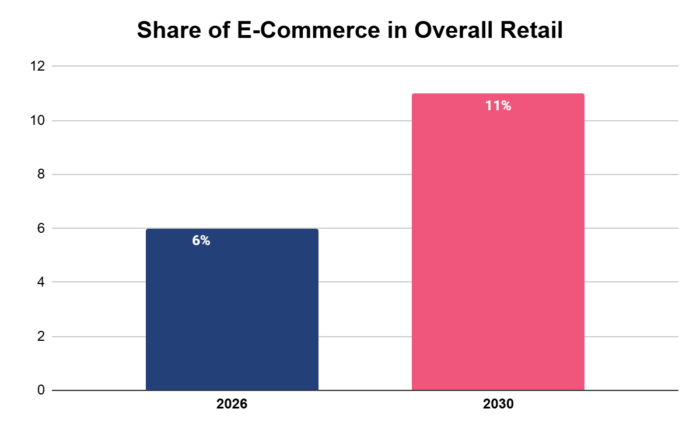
Digital platforms are creating significant opportunities for MSMEs to reach to consumers across India without depending only on traditional retail channels. In fact, MSMEs will account for almost half of India’s e-commerce growth by 2030, as the country’s share of e-commerce in overall retail will increase from 6% to 11%2. Selling through e-commerce marketplaces, social media platforms, and directly to consumer websites helps businesses expand market reach, improve brand visibility, and access customers across Tier-2 and Tier-3 cities. Social commerce and digital marketing are also helping smaller businesses build regional brands and help increase direct consumer engagement.
2. Strengthening Logistics and Local Supply Chains by Upskilled Workforce
Upskilling and strong local supply chains go hand in hand because a modern supply chain is only as strong as the workforce supporting it. As MSMEs increasingly localise sourcing and manufacturing, they require skilled workers who can manage production processes, quality standards, inventory systems, logistics operations and advanced machinery efficiently.
To achieve this, MSMEs need trained workers capable of handling precision manufacturing, automation, quality control, digital inventory management, and supply-chain coordination.
For example, if an automotive manufacturer wants to source more components, locally MSME suppliers must have the technical capabilities and skilled workforce required to meet quality, delivery and production standards. Without adequate upskilling, local suppliers may struggle to compete with global manufacturers.
3. Adoption of Technology for End-to-End Consumer Visibility
Technology adoption is helping MSMEs improve the overall customer experience by creating better visibility across ordering, inventory, payment systems, and delivery processes. Digital systems such as online catalogues, inventory management tools, CRM platforms, and automated customer communications help businesses manage operations more efficiently while improving transparency and consumer trust. End-to-end digital visibility is becoming increasingly important for organised retail and online- selling ecosystems.
As domestic demand grows across cities, towns and industrial clusters, MSMEs can play a larger role in connecting Indian production with Indian markets. Businesses that invest in quality, workforce skills, digital visibility and better financial planning will be better prepared to serve this growing demand. In the long run, this can help MSMEs build stronger enterprises while supporting India’s journey toward a more self-reliant manufacturing economy.
1 Ministry of Commerce & Industry, PIB
2 McKinsey & Company